Certifications
BREEDING EXCELLENCE: OUR QUALITY STANDARDS & PROFESSIONAL CERTIFICATIONS
BREEDING EXCELLENCE: OUR QUALITY STANDARDS & PROFESSIONAL CERTIFICATIONS
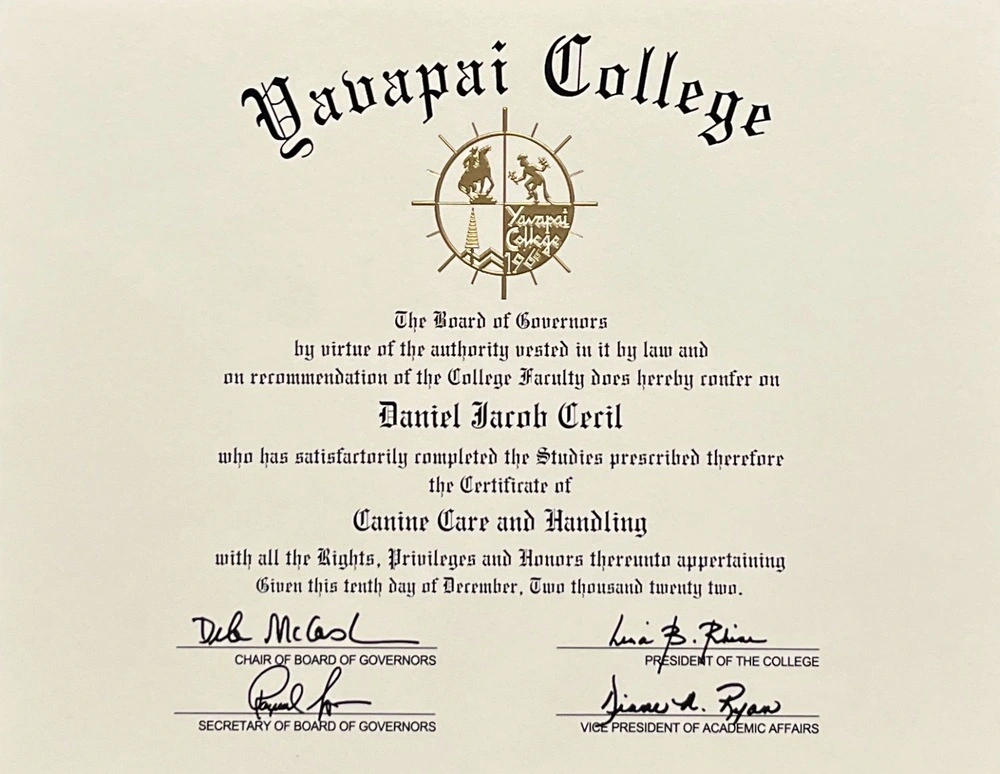
The Therapy and Service Dog Team Skills Certificate provides the student and canine with skills required for therapy dog team work and the canine behavior foundation skills for the student/canine team to continue on with advanced service dog training from a third party provider or the Yavapai College Service Dog Certificate. The student/canine team will also gain the skills needed to take the Canine Good Citizen (CGC) test and the therapy dog evaluation exam offered by third party evaluators from three national therapy dog organizations.
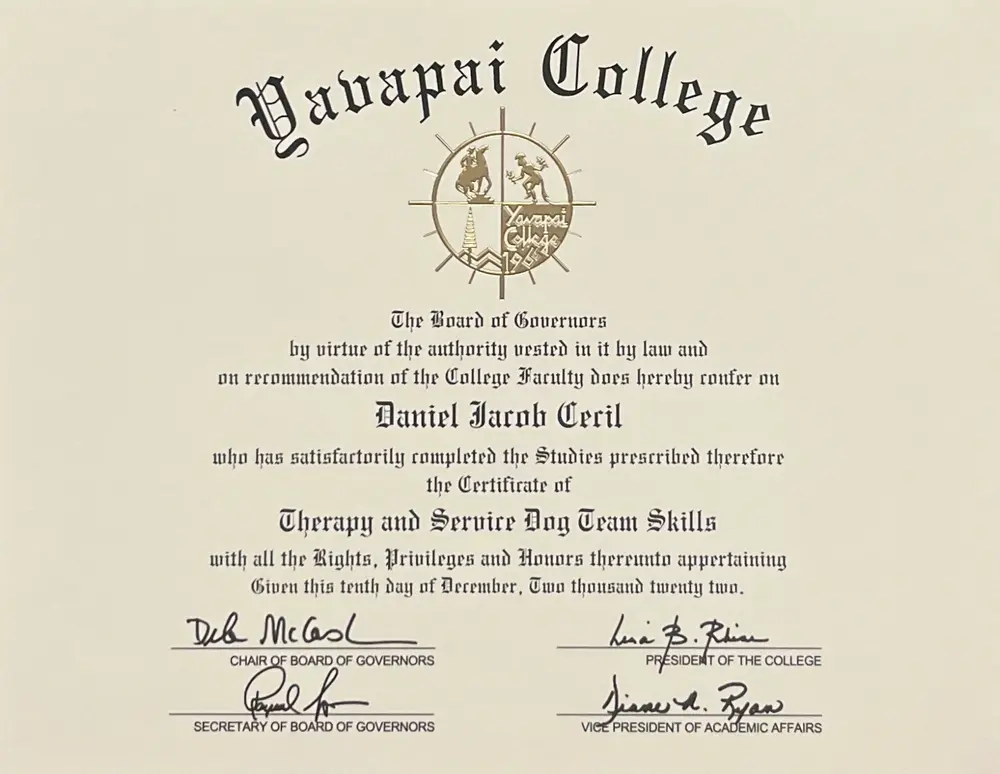
The Canine Care and Handling Certificate prepares students for entrepreneurship, employment or advancement in a variety of canine fields by developing student/canine handling skills, communication skills, health care and business operations knowledge. Students also complete the training requirements for the Therapy & Service Dog Team Skills Certificate which provides skills needed to take the Canine Good Citizen (CGC) test and a therapy dog evaluation exam offered by evaluators from three national therapy team organizations.
The Orthopedic Foundation for Animals (OFA) is a non-profit organization that evaluates and certifies dogs for various genetic and inherited conditions. Their testing helps breeders produce healthier puppies and helps puppy buyers select dogs with reduced health risks. Key aspects of OFA testing include:
The process typically involves a veterinarian performing the appropriate examination, with results submitted to OFA for expert review. Dogs that pass evaluations receive certifications that breeders can share with potential puppy buyers. OFA maintains a public database of results, promoting transparency in breeding practices. By selecting dogs from OFA-tested parents, buyers gain confidence that their puppy comes from health-screened bloodlines, potentially reducing future veterinary costs and heartache from preventable conditions.
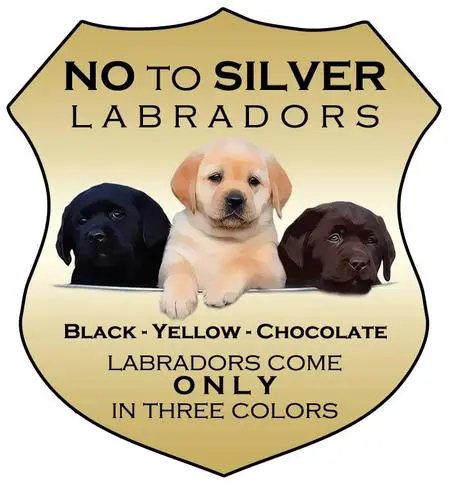
Silver Labradors are controversial in the purebred dog community for several important reasons. The silver coat color is not recognized by major kennel clubs for Labradors and does not appear in the breed standard, which only acknowledges black, yellow, and chocolate as legitimate Labrador colors.
Breeding for this non-standard color often prioritizes appearance over health and temperament. Furthermore, the dilution gene can be linked to color dilution alopecia, a skin condition causing hair loss and chronic skin problems.
Responsible breeding focuses on maintaining breed standards, genetic health, and proper temperament rather than creating designer colors for profit. Ethical breeders avoid producing silver Labradors to protect the breed's integrity and prevent the potential health issues that can arise from dilution gene carriers.